Art Rotterdam 2026: Group presentation with Inez & Vinoodh, Ruth van Beek, Michael Bailey-Gates, Vera van Dam and introducing Sara de Brito Faustino

 C04
https://shop.weeztix.com/5348f7d4-7466-4a40-a1fa-ffa9096790c7/tickets?shop_code=kk3qy3fd&original_referer=https%3A%2F%2Fwww.artrotterdam.com%2F
https://www.artrotterdam.com/
C04
https://shop.weeztix.com/5348f7d4-7466-4a40-a1fa-ffa9096790c7/tickets?shop_code=kk3qy3fd&original_referer=https%3A%2F%2Fwww.artrotterdam.com%2F
https://www.artrotterdam.com/
Opening: Thursday 26 March, by invitation only
Fair: Friday 27 March 11.00 – 19.00
Saturday 28 March 11.00 – 19.00
Sunday 29 March 11.00 – 19.00
At ART ROTTERDAM 2026, the Ravestijn Gallery presents Bodyworks: a showcase of works that centre on the body as both subject and material, with diverse contributions from Inez & Vinoodh (b. 1963/1961, NL), Ruth van Beek (b. 1977, NL), Vera van Dam (b. 1989, NL), Michael Bailey-Gates (b. 1992, US), and introducing Sara de Brito Faustino (b. 1999, CH).
Whether distorting and transforming the human form, exploring its sculptural possibilities, shaping new gestures of intimacy, or leaning further into the realm of the grotesque, the featured artists take fleshy surfaces as a canvas for their distinct ideas. Bodyworks operates in two directions, pointing to the body as a site of artistic labour and experimentation, while also referencing systems of manufacture, modification, and display.
Michael Bailey-Gates’ practice, focusing largely on arresting portraits, offers an emancipatory space to those in the frame: subjects who are often drawn from the artist’s close circle of friends. In this context, where each sitter performs freely and exuberantly for the camera, questions of gender are briefly rendered superfluous, whilst society’s restrictive norms are suspended for a moment. At times, the artist also appears; for Bailey-Gates, the camera is a powerful vehicle with which to navigate the tectonics of self-representation and identity, simultaneously toying with viewers’ expectations and proffering an alternative model of unconventional beauty.
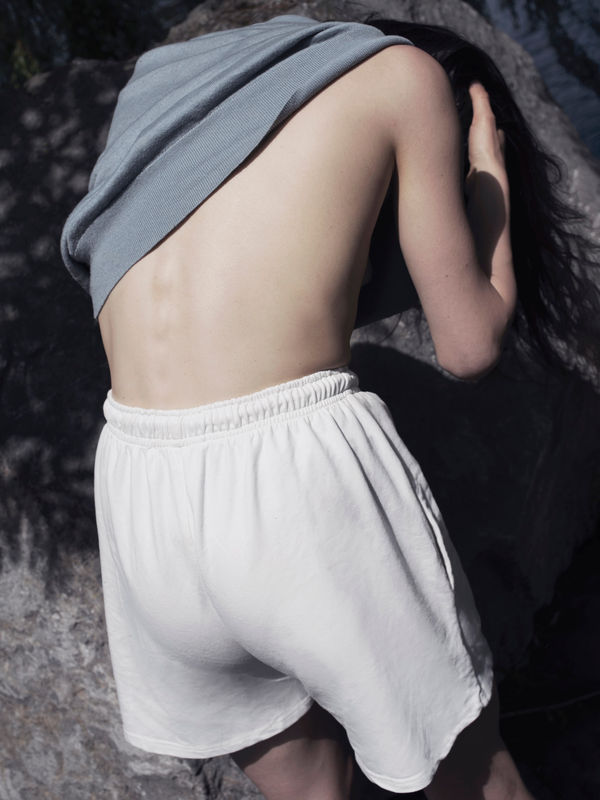
Where Bailey-Gates deploys nudity as a metaphor for the vulnerability of self-acceptance, Vera van Dam’s muted Dahlia project sets the softness of bare skin alongside the sober fittings and upholstery of a vehicle. Her work bridges the human skeleton with the manufactured chassis, plotting a conceptual link between the female form and the car: both as male lust objects and as the subject of endless advertisements. By withholding the faces of her female subjects, van Dam complicates the act of objectification, transforming anonymity into a critical tool for examining pervasive social forces in a masculine-dominated world.
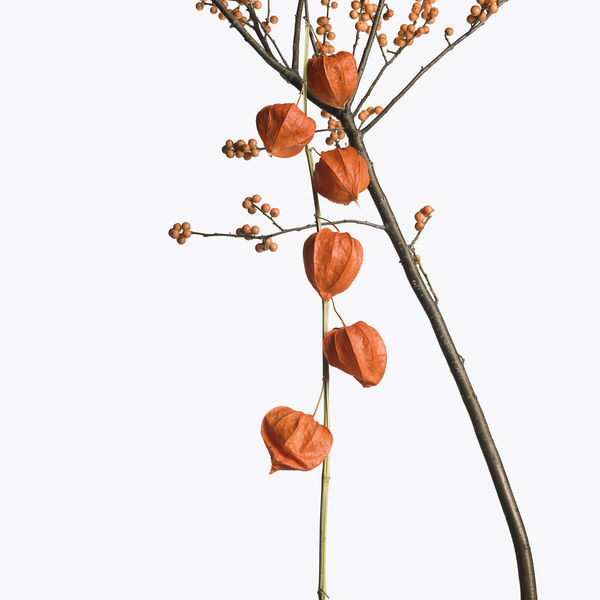
Elsewhere, in the work of Inez & Vinoodh, the body appears repeatedly in reconfigured form: altered or obscured through a range of digital processes that the pair have pioneered since the 1990s. At times, their interventions are subtle, enchanting the viewer by way of an elongated neckline or an exaggerated bodily curve. In other instances – as in their kaleidoscopic 2002 campaign for Balenciaga – the effect is more dramatic, transforming a series of images into a new, butterfly-shaped whole. Bodyworks coincides with Inez & Vinoodh’s Can Love Be A Photograph exhibition at Kunstmuseum The Hague: a landmark retrospective charting 40 years of daring image-making, underscoring their enduring influence on overlapping worlds of art and fashion.
Transformation, too, is a central feature of Ruth van Beek’s colourful, collage-based works, which emerge reborn from her extensive archive of found materials. With each cut and fold, the hierarchies between van Beek’s source images collapse, establishing new hybrid forms that sit between object and representation. At Art Rotterdam, she debuts new work based on body parts, gesturing at their contours in her familiar palette of delicate materials.
Rounding off the presentation is Sara de Brito Faustino, whose A Home With No Roof series sees the artist revisit her relationship with the dysfunctional domestic environment in which she was raised. Confronting these memories in a bid to overcome them, she creates and photographs a range of alluring yet unsettling dioramas – where crudely sculpted body parts interact with fragile homespun objects, as if in the interior spaces of an eerie doll’s house. In parts, the artist’s body is itself reconfigured in clay, paint, or plaster, fortifying her place within the scene, as well as rendering her alien. Faustino’s works oscillate between intimacy and discomfort, using physical fragmentation as a means of confronting emotional inheritance.
For more information about the artists, or to receive images, please contact the gallery at jasper@theravestijngallery.com. Likewise, please visit our website here!
The Ravestijn Gallery
Oudelandsdijkje 9
1141 PH Monnickendam
The Netherlands
-
 Inez & Vinoodh, Untitled (Head 1), 2008
 -
Inez & Vinoodh, 1 Chinese Lantern, 1 Winter Berry, 2013
-
Inez & Vinoodh, Butterfly - Balenciaga Campaign, 2002
-
Inez & Vinoodh, Vivienne in the kitchen, 2022
-
Sara de Brito Faustino, The Giant, 2024
-
Sara de Brito Faustino, Bedroom, 2024
-
Sara de Brito Faustino, The Builder, 2023
-
Sara de Brito Faustino, The Origin, 2024
-
Vera van Dam, Dahlia (11), 2024
-
Vera van Dam, Dahlia (12), 2024
-
Vera van Dam, Dahlia (23), 2024
-
Vera van Dam, Dahlia (24), 2024
-
Michael Bailey-Gates, Rob, Kennedy, 2023
-
Ruth van Beek, Pink and beige manual, 2025
-
Ruth van Beek, Leg (figure 154), 2024